Walk into any progressive cafe in Metro Manila today, and you’ll notice a major shift behind the bar. The beverage menu is no longer just split between “Espresso” and “Non-Coffee.” Matcha and Hojicha have officially broken out of their shells, commanding their very own dedicated sections on the menu board.
As a cafe owner, seeing a trend blow up is exciting, but it also triggers a practical question: How much does this actually cost me to serve? Let’s address the reality of the business right away. Authentic Japanese green and roasted teas are premium, artisanal ingredients. They cost more per serving than standard coffee beans, and if you are using popular milk alternatives like oat milk, your beverage cost changes entirely.
To run a sustainable, progressive cafe, you cannot guess your prices or copy the shop down the street. Let’s break down the exact math behind proper tea costing, look at the impact of the milk variable, and see why a dedicated tea series is a mandatory direction for your business.
The Raw Data: Sourcing the Powder
True, ground matcha and expertly roasted hojicha from regions like Shizuoka, Japan, require meticulous labor. At HOMA, we believe in complete transparency, so we look at the raw cost per gram.
For a cafe-quality beverage that actually stands out, we always recommend a minimum 5-gram serving size to ensure the rich flavor of the tea isn’t washed out by milk and ice. Here is exactly what your base powder investment looks like per cup:
The Matcha Series (Based on a 5g serving)
- Nagomi (Classic Select): ₱8.75/g $\rightarrow$ ₱43.75 per cup
- Umi (Organic): ₱13.35/g $\rightarrow$ ₱66.75 per cup
- Hayashi (Artisan’s Choice): ₱15.50/g $\rightarrow$ ₱77.50 per cup
- Sen (Premium Organic): ₱16.45/g $\rightarrow$ ₱82.25 per cup
The Hojicha Series (Based on a 5g serving)
- Kitsune (Golden Roast): ₱7.25/g $\rightarrow$ ₱36.25 per cup
- Kuro (Dark Cacao): ₱7.95/g $\rightarrow$ ₱39.75 per cup
By comparison, a standard double shot of specialty espresso beans utilizes about 18g to 20g of coffee. If you source a great wholesale espresso blend for around ₱1,200 per kilogram, your raw coffee cost sits between ₱21.60 and ₱24.00 per shot.
Looking strictly at the base ingredient, premium tea requires a higher financial input than coffee. This is why proper costing is so critical—you are dealing with a premium product from the very first scoop.
The Variable: Factor in the Oat Milk Premium
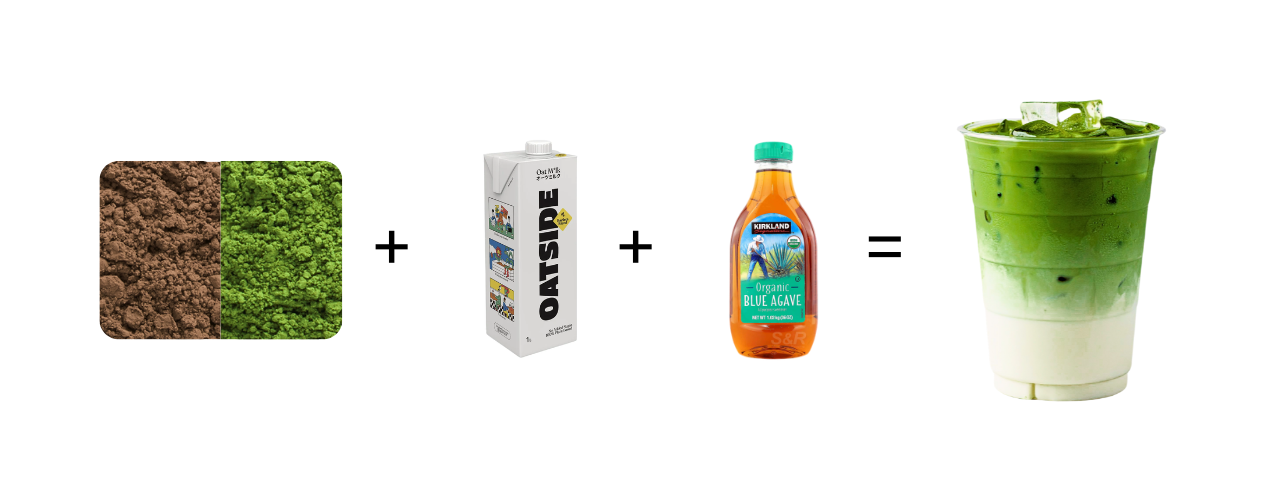
The powder is only half the equation. The modern tea enthusiast rarely orders their matcha plain with water; they want a creamy latte, and more often than not, they are asking for a plant-based alternative.
This introduces the biggest variable in your Cost of Goods Sold (COGS): Oat Milk.
In the current Philippine market, a high-quality, barista-grade liter of oat milk costs on average ₱150 to ₱200 per carton. When you do the math for a standard 16oz iced beverage requiring 150ml of milk, your liquid base cost scales drastically:
- Standard Dairy Milk (approx. ₱100/L): ₱15.00 per serving
- Barista Oat Milk (₱150–₱200/L): ₱22.50 to ₱30.00 per serving
Let’s look at a realistic, fully costed comparison for a premium Iced Oat Milk Matcha Latte using our organic Umi profile at our recommended 5g serving size:
| Expense Item | Standard Dairy Base | Premium Oat Milk Base |
| 5g HOMA Umi Matcha Powder | ₱66.75 | ₱66.75 |
| 150ml Liquid Base | ₱15.00 | ₱22.50 – ₱30.00 |
| Simple Syrup / Sweetener | ₱2.00 | ₱2.00 |
| Takeaway Cup, Lid, and Ice | ₱6.00 | ₱6.00 |
| Total Beverage COGS | ₱89.75 | ₱97.25 – ₱104.75 |
When your total cost to produce a single drink edges toward or past the ₱100 mark, treating your tea menu like an afterthought will quickly eat into your profits. You must structure your menu prices to reflect these real-world inputs.
The Good News: A Fanbase That Understands Value
While your food cost percentages might sit higher than a low-overhead black coffee, you have a massive advantage: Matcha and Hojicha carry immense pricing power. Consumers are fully aware that genuine Japanese tea is a specialty craft. Because of this, premium green and roasted tea drinks in Manila successfully command a retail menu price of ₱200 to ₱300 per cup. When a customer orders an Iced Oat Milk Umi Latte at your counter for ₱260, your percentage margin might feel tighter, but your absolute cash profit is an incredible ₱155+ on a single transaction. Sourcing lower-grade, yellowish, bitter powders from online marketplaces for a few pesos less might seem tempting, but it instantly alienates the very fanbase driving this trend. Modern tea lovers will happily pay a premium for a smooth, vibrant, umami-rich cup, but they will leave your cafe and never look back if served a gritty, dull alternative.
Opening the Gate: The Standalone “Matcha Series”
Because your community views this category as its own artisanal subset, the most progressive move your cafe can make is to stop hiding matcha as a single line item under “Non-Coffee.” Progressive bars are leaning into the movement by opening up a dedicated Matcha & Hojicha Series. Once you have established your core powder costing, launching a series allows you to create highly creative, photogenic, and high-value signature drinks with very little extra ingredient overhead.
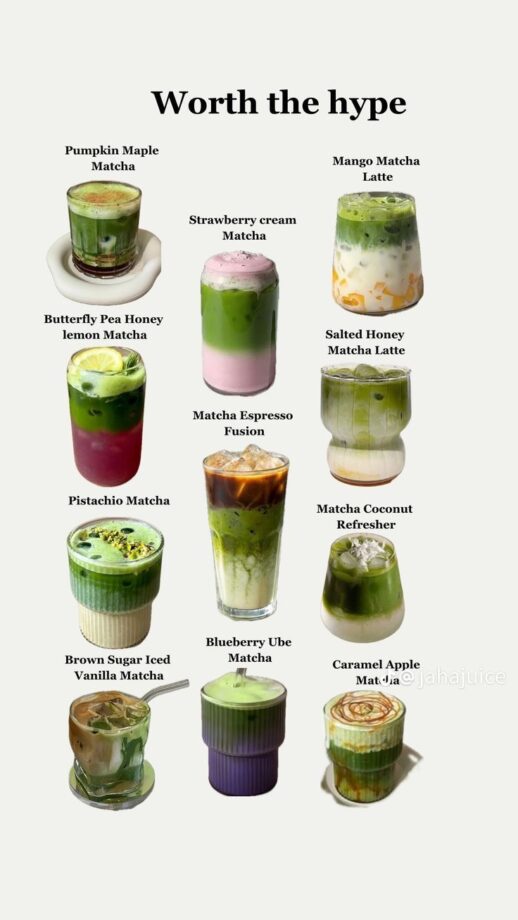
Some Popular Matcha Recipes
Here are some popular matcha recipes getting traction! Might want to consider these for your menu and add the costs to your recipe when it comes to your overall costing.
Partnering with Financial Clarity
At HOMA, we choose to look at the beverage industry with real-world clarity. We don’t hide behind confusing marketing buzzwords, and we don’t disguise our numbers. We share our price-per-gram open and clear because we know that a thriving cafe relies on accurate back-of-house costing.
Stepping into a progressive tea program means respecting the true cost of quality leaves and premium plant milks. By locking your operations to a precise 5g standard and utilizing a transparent wholesale partnership, we help your baristas deliver absolute consistency, while ensuring your business captures a loyal, premium community that keeps your counter profitable.
