
Let’s start off by saying it’s not that hard!
Matcha everywhere, and we know you see all sorts of servings, and many cups of many shapes and sizes. Not only that, but you see it used beyond lattes; We’re sure that at this point you’ve seen desserts made with some form of matcha too!
However, matcha’s popularity also parallels the rise of subpar matcha powder that don’t necessarily give the best experience for its use. Even the guiding line called “ceremonial” and “culinary”, which are mere marketing terms, don’t truly define the quality of the matcha.
“Is Your Matcha Good? Is It Ceremonial Grade?”
While it helps draw a figurative line for those who don’t want to spend much time learning about the differences, it is a loose term that can be used by anyone down the street.
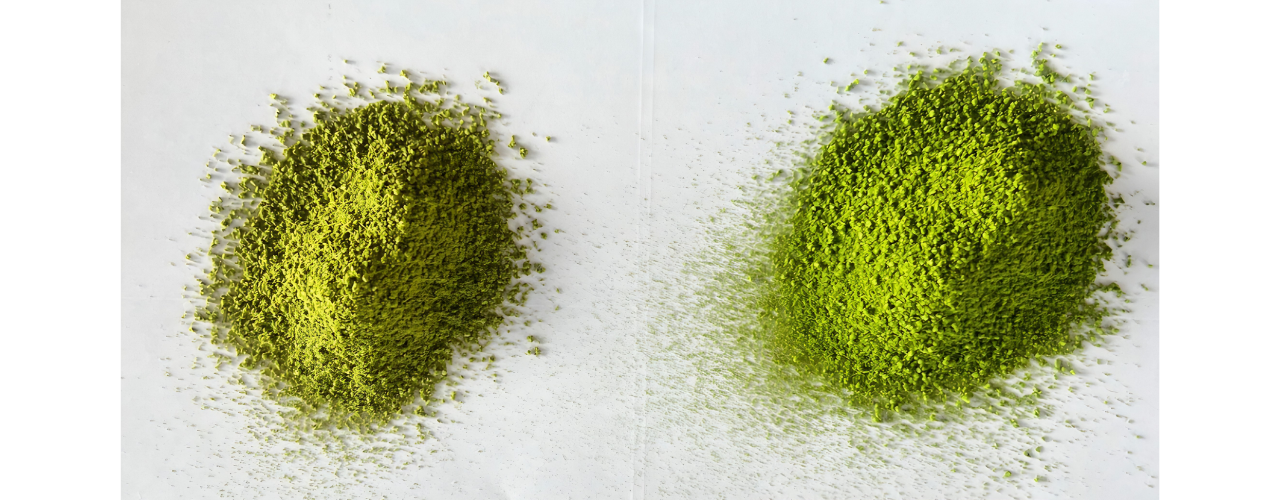
Careful: Ceremonial-grade matcha is a term that can be used by anyone
Instead of looking for a term to distinguish these two, it’s best to look at the characteristics:
1. Check the Color: Vibrant and Green vs Dull and Yellow
For matcha, one of the first places to start is to check with your eyes! Matcha, or at least good quality matcha, results in a vibrant green color.
If you open a container looks yellowish, the matcha be subpar due to a few reasons:
- Grew later on in the season (what others call 2nd or 3rd cut)
- not been manufactured well (not shaded well)
- lost its potency (due to oxidation)
At HOMA, we source from the matcha capital of Japan, Shizuoka. Shizuoka’s climate and traditional shading methods ensure that our matcha has that “vibrant green” color that’s adored by matcha lovers and cafe customers!
2. Taste Test
Good quality matcha should taste creamy and well-rounded. Umami is a word that gets thrown around a lot, which means savory and rich in depth.
Good matcha also should have a sweetness!
Subpar matcha often tastes bitter or astringent. If it feels scratchy, or tastes bitter, it won’t be an enjoyable experience.
Low quality matcha is then often mixed up with a lot of sugar or syrup, which just isn’t the same as serving of good quality matcha and complimenting sweeteners.
3. Texture
Higher quality matcha tends to be smooth. Whisk high quality matcha, it should dissolve almost completely, creating a silky-smooth foam on top
Inferior matcha, on the other hand, tends to feel sandy/gritty. This is because it’s just blasted on machines to produce it more quickly, but this may also result in unnecessary heat which can damage the flavor of the powder and leave a texture that feels a little sandy.
In short, silky smooth or creamy is good, while rough and bitter is inferior.
4. Learn About Cultivars
This is also a term used a lot. Cultivar, or otherwise known as “Cultivated Variety”, think of them as different breeds of matcha. Each has its own unique notes and flavor to your cup. It doesn’t have to be complicated, you just have to enjoy the “vibe” you enjoy.
Here are the most popular cultivars you’ll commonly run into:
Yabukita: The dependable classic. It’s the most grown cultivar in Japan because it’s robust and reliable. It provides that familiar, refreshing, and slightly earthy “green” taste that most of us recognize as traditional tea.
Saemidori: The bright star. Known for its vivid, “clear green” color, it is incredibly sweet and creamy. It has very little bitterness, making it a favorite for those who love a mellow, vibrant latte.
Okumidori: The smooth all-rounder. This cultivar is loved for its deep, rounded flavor and very clean finish. It’s balanced and sophisticated without being too “loud,” making it a popular choice for high-end cafe menus.
Samidori: The traditional choice. Prized for its intense umami (that savory, broth-like depth) and thick texture. You’ll often find this used in traditional tea ceremonies because of its rich, elegant character.
Asuyu: The creamy nut. This one often brings a gentle, nutty sweetness to a blend. It’s excellent for adding body and a comforting, “toasted” feel to your drink.
Tsuyu-hikari: The refreshing burst. It’s known for a bright, almost floral aroma and a very crisp taste. It’s a great pick if you’re looking for a cup that feels light and energizing.
By blending these—like how we use a mix of Yabukita and Saemidori at HOMA—we can create a cup that has the perfect balance of color, sweetness, and depth.
The Middle Ground
In the Philippines, you only had two choices: the very cheap, bitter matcha found on big online marketplaces (like TikTok, Shopee or Lazada), or the incredibly expensive retail tins meant for special occasions.
HOMA was started to fill that gap. We believe you shouldn’t have to choose between “cheap and bitter” or “expensive and intimidating.” There is a middle ground where inclusive pricing meets genuine quality.
We help consumers and businesses by sourcing cost-effective but quality-oriented matcha.
Sourcing directly from Shizuoka and focusing on essential profiles helps us serve cafes and home enjoyers serve a cup that is vibrant, delicious, and consistent every single day.
